Be thorough – Give patients a second chance at life
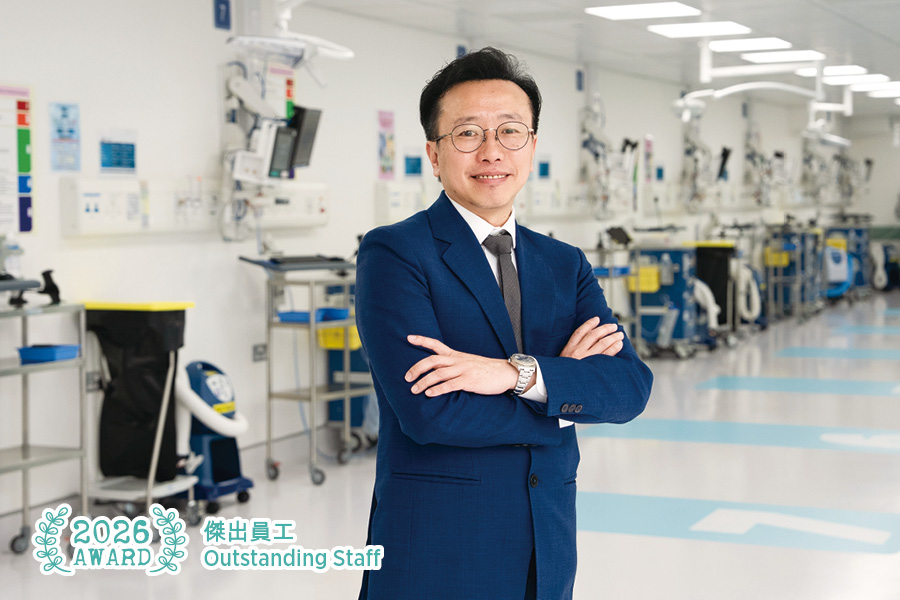
Dr Benny Cheng Chun-pong
Deputy Hospital Chief Executive, Tuen Mun Hospital / Chief of Service (Anaesthesia and Operating Theatre Services), New Territories West Cluster
"The role of an anaesthesiologist is far more complex than simply administering an injection. We must be fully involved throughout the perioperative period – before, during, and after surgery – to ensure the most ideal clinical outcomes for patients." As a champion of perioperative medicine, Dr Benny Cheng Chun-pong's vision reflects his unwavering commitment to excellence and a drive for continuous improvement in healthcare services.
Pre-operative involvement begins far before admission. Under Dr Cheng's leadership, the New Territories West Cluster (NTWC) established the NTWC Cardiopulmonary Exercise Testing and Prehabilitation Team in 2019 to provide high-risk patients with precise assessments and personalised prehabilitation training. In one notable case, a lung cancer patient suffering from scoliosis was initially deemed unfit for surgery due to high risks under traditional assessment standards. However, through the team's targeted pre-operative training, the patient successfully underwent the procedure and recovered.
Being thorough is treasurable in times of adversity. During the COVID-19 epidemic, Dr Cheng led his team to establish Extended Post-Anaesthesia Care Unit beds within the operating theatre, which not only ensured that surgical services remained uninterrupted during the epidemic but also effectively relieved the workload of the Intensive Care Unit. This initiative also strengthened post-operative monitoring for medium-risk patients, enabling the medical team to detect changes in patient conditions early and intervene immediately.
Dr Cheng's thoroughness remains in hospital administration and management. He facilitated Tuen Mun Hospital Neuroscience Centre to receive a sum of donation to kickstart a research study on using Magnetic Resonance-guided Focused Ultrasound to treat patients with Parkinson's disease. He shares, "witnessing the moving moment of a Parkinson's disease patient whose trembling hands could finally hold a cup of water steadily is the very reason I chose to practice medicine."