AI predicts changes in patient condition early to save lives
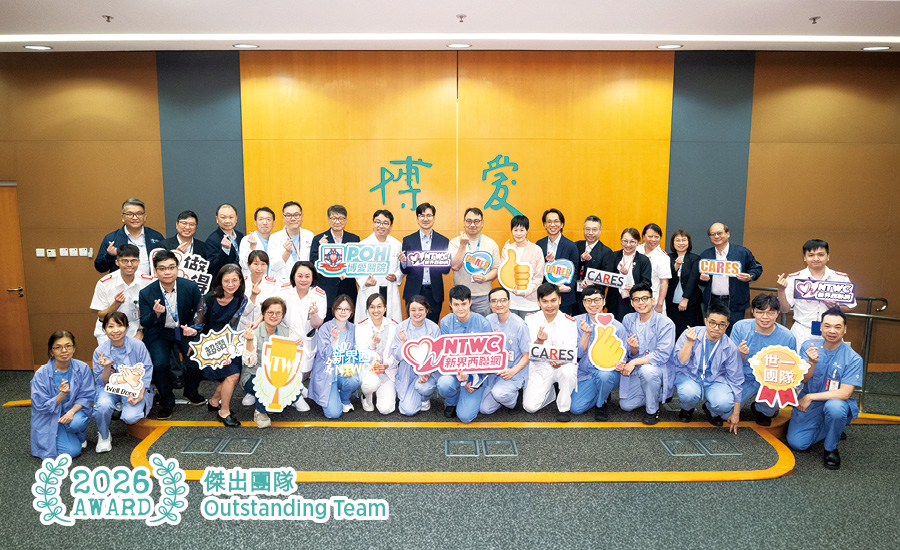
Smart-CARES AI Deterioration Prediction Response Team
New Territories West Cluster
In patient treatment, every second counts. The early detection of critical changes in a patient's condition is often the key to saving lives. With a spirit of innovation, the Smart-CARES AI Deterioration Prediction Response Team launched an artificial intelligence (AI) alert system at Pok Oi Hospital comprehensively in 2025. This original AI predictive model was co-developed by the clinical team of the New Territories West Cluster and Information Technology and Health Informatics Division of the Hospital Authority Head Office. It automatically analyses over 20 medical data, including vital signs, laboratory results, and clinical records, to precisely predict the risk of deterioration in hospitalised patients within the next 48 hours and reduce the risk of serious complications. The new system replaces the original manually-operated risk prediction, allowing clinical team to closely monitor patient's condition. The Team states, "the system functions like a 24-hour caregiver, constantly monitoring patient changes. Every time medical data is updated, the system automatically processes the information. When it detects a risk of deterioration, the system immediately sends instant alerts via HA Chat and the ward dashboard, assisting medical staff in assessing the patient's condition and enabling timely intervention."
The system successfully predicted early signs of deterioration in a post-operative patient with peripheral vascular disease. By analysing the patient's latest medical data, the system detected warning signs such as an increased heart rate and an elevated level of platelets and C-reactive protein. Based on this analysis, the system issued an alert indicating a significant risk of deterioration. Medical staff promptly intervened by performing blood tests and administering antibiotics, thereby successfully preventing the patient's condition from worsening into potentially fatal sepsis. The Team shares, "the accuracy rate of the system is 92%, and the false alert rate is only about 1%. Following the system's implementation, we observed a reduction of one death for every 166 cases, and a reduction of one day in the average length of stay, in comparison with the data from the same period."
Currently, the Team is gradually expanding the implementation of this system to other hospital clusters as well as continuous training on AI model, taking a significant step forward in promoting the development of smart healthcare.