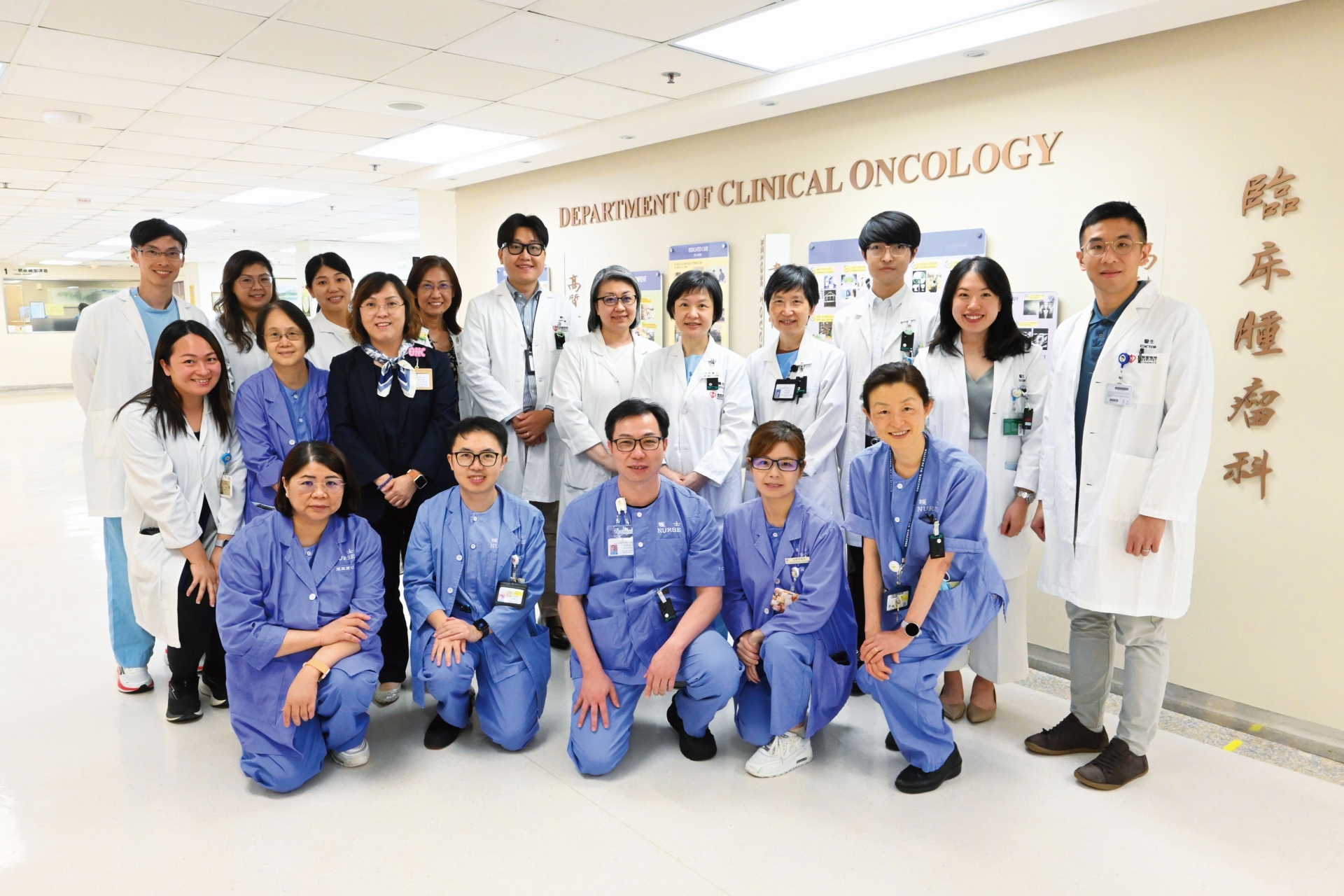
Walking alongside patients in their final journey
Through ACP, the healthcare team engages patients and their families in a proactive manner to anticipate patients' medical needs and care preferences, thereby providing appropriate palliative care and accompanying them with love and compassion through life's final chapter, leaving no regrets behind.
The final gift for wife
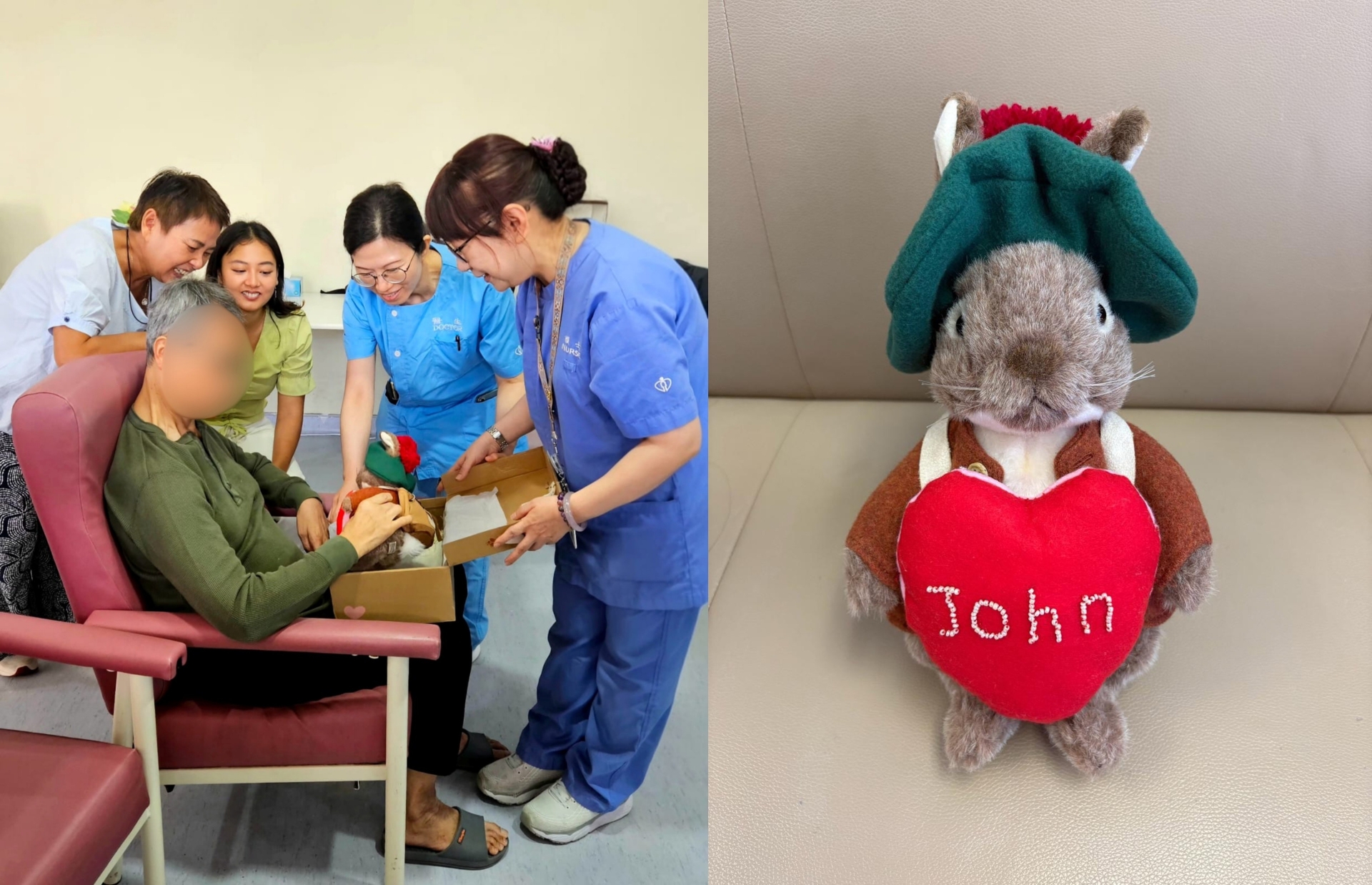
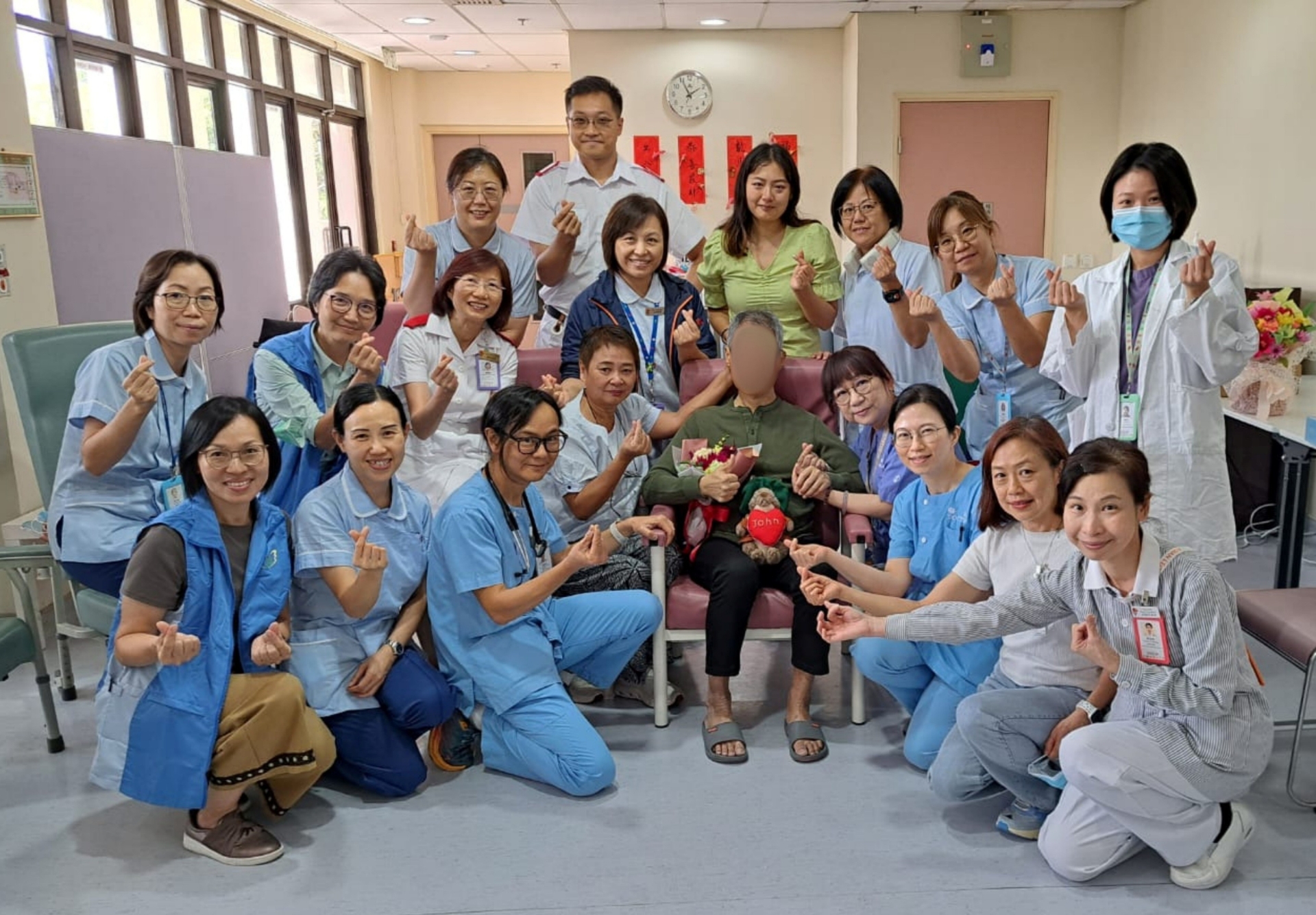
John was diagnosed with skull base chordoma in 2017. His mood worsened as his physical functions gradually declined. In addition to palliative care, the New Territories East Cluster Palliative Care Team discussed ACP with him and his family, learning about his wishes and care preferences. Carmen Wong, Advanced Practice Nurse of the Palliative Care (Home Care Unit) of Bradbury Hospice/North District Hospital shares, "John used to be a dancer and worked in the travel industry, enjoying a vibrant life. We learnt that he loved listening to music and would like to give his wife a gift, thus we helped him choose his favourite songs, mixed them with his heartbeat and saved the audio in a speaker. We then sewed it into a stuffed toy for John to deliver to his wife, allowing his heartbeat to accompany her for the rest of her life."
Carmen adds that John had felt saddened by his admission to a residential care home for the elderly. With the team's coordination, he communicated more openly with his family and came to understand that he had not been abandoned. They had made this arrangement out of concern for his safety at home. Having endured years of pain, John wished to ease his distress in the final stages of life. He therefore made an AMD and DNACPR order, and chose to spend his final days at the residential care home. This allowed his family to be ready in advance, enabling them to accompany John peacefully through his final days.
Connecting life stories, fulfilling the final journey
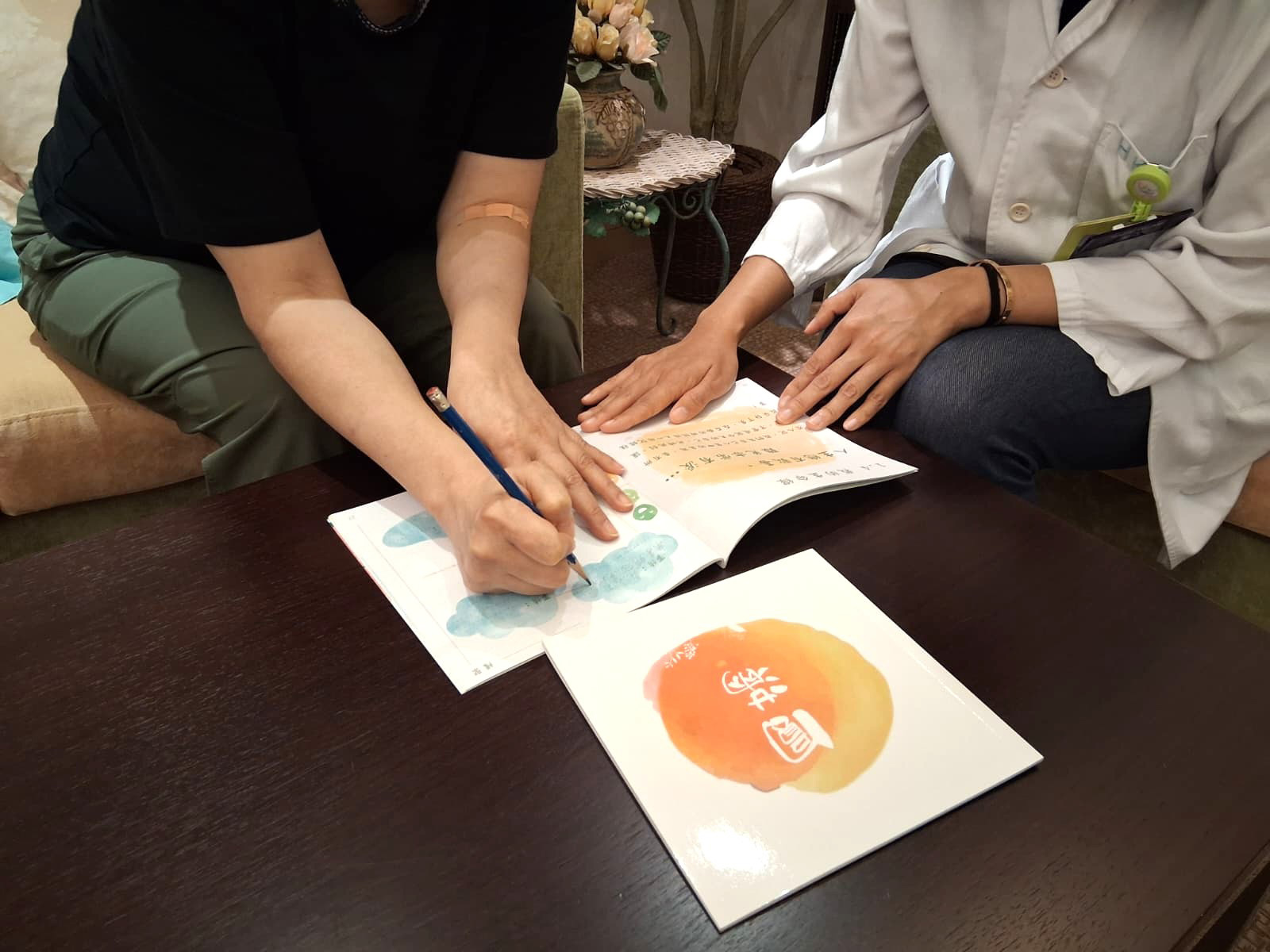
In 2020, the Department of Clinical Oncology and the Cancer Patient Resource Centre at Pamela Youde Nethersole Eastern Hospital (PYNEH) jointly launched the Life Review Programme. Through two booklets, Connections and Fulfilment, the team gently guides patients in reflecting on their lives, empowering them, and introducing ACP, AMD and DNACPR orders, assisting patients to plan their final life chapters.
Connections is like a commemorative book. Debbie Lo, Assistant Social Work Officer of the Community and Patient Resource Department shares, "we invite patients to paste their old photographs into the Connections booklet and share the stories behind them. I recall an elderly lady who, despite severe pain that kept her from sitting for long periods, looked at her old photographs and spoke with great enthusiasm about her 30 years of volunteer service at the district elderly community centre, and the amazing moment of graduating from the volunteer training programme and wearing the square cap, as if she had forgotten her pain."
The Fulfilment booklet helps patients express their final wishes, including treatment directions, messages for loved ones, and arrangements after death. Yu Ka-sin, Associate Nurse Consultant (Palliative Care) of the Department of Clinical Oncology, notes, "one elderly patient shared that the booklet helped her realise she could choose her treatment direction and make an AMD, bravely express her wishes to her family and plan her final journey with peace of mind. One family member, who had grown distant from her father, gained insight into his thoughts through the booklet, which resolved long-standing misunderstandings. She described the two booklets as a wonderful gift from her father."